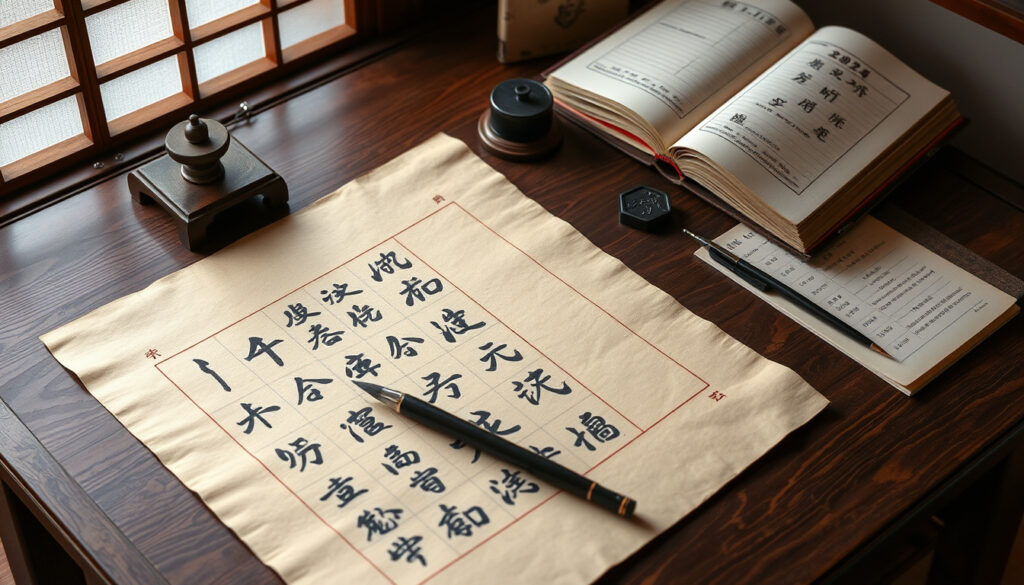
Japanese Names: Rare, Boy, Girl & How to Pick Yours
Few things carry as much weight as a name—especially in Japan, where a single kanji character can echo family hopes, cultural heritage, and even a child’s path. Whether you’re searching for a rare Japanese name or wondering what “suki” really means, this guide walks through the rules, trends, and practical steps to picking a name that sticks—by the end, you’ll know why some names are timeless and others raise eyebrows.
Japanese first names in database: 26,551 · Japanese last names in database: 70,620 · Kanji variations: 333,585 · Most common suffix for girl names: -ko (child)
Quick snapshot
- Japanese names are written in kanji, with pronunciation rules (Wikipedia – Japanese name overview)
- Suki means “like” or “fondness,” not strong love (ThoughtCo – Japanese word breakdown)
- Miku is a recognized name meaning “beautiful sky” or “future” (TheBump – Miku name meaning)
- The exact number of rare names used in modern Japan varies by region (Nippon.com – baby name trends)
- Whether some rare names are considered outdated or trending is debated (Tokyo Weekender – 2025 rankings)
- The total number of kira-kira names is not officially tracked, making estimates unreliable (Nippon.com – baby name trends)
- The long-term effect of the 2024–2025 reforms on rare name usage remains to be seen (SCMP – policy details)
- Japan introduced rules requiring phonetic readings for names, targeting nonstandard kanji readings (Al Jazeera – new name-reading law)
- In 2025, short gender-neutral names like Ao, Minato, Sui, and Rin topped popularity charts (Tokyo Weekender – 2025 trends)
- Expect further tightening of kanji reading rules as the family registry system updates (SCMP – policy details)
- Rare and kira-kira names may decline as parents opt for simpler, legally safe readings (Japan PI – name reform analysis)
Here are the key statistics on Japan’s naming system.
| Attribute | Value |
|---|---|
| Total first names in database | 26,551 |
| Total last names in database | 70,620 |
| Kanji variations | 333,585 |
| Most common girl name suffix | -ko (child) |
| Yuki popularity | Unisex; used for both boys and girls |
What is a rare Japanese name?
Rare Japanese girl names
- Tsubaki – a flower name rarely used today (Happiest Baby – rare name guide)
- Suzume – means “sparrow,” uncommon but poetic (Happiest Baby – rare name guide)
- Koharu – “small spring,” appears in traditional literature (Happiest Baby – rare name guide)
- Hayami – super-rare, seldom seen in registries (Happiest Baby – rare name guide)
Rare Japanese boy names
- Ryo – means “good” or “distant,” but not in top 50 (Tokyo Weekender – 2025 popularity)
- Kaito – “ocean flight,” rising but still uncommon (Tokyo Weekender – 2025 popularity)
- Haruki – “spring tree,” literary but rare for newborns
- Sora – “sky,” gender-neutral but rarer for boys
What makes a name rare in Japan?
Rarity often comes from using uncommon kanji or unusual combinations. For example, the name Bashira (joyful) is still very rare according to name databases (Happiest Baby – Bashira listing). Regional usage also plays a role – some names are common in Kyoto but unheard of in Tokyo.
A name that’s rare today could become trendy tomorrow. In 2025, short vowel-heavy names like Sui (water) jumped from obscure to top-tier (Nippon.com – 2025 data).
The pattern: rare names in Japan aren’t just about uniqueness – they carry a risk of being read incorrectly or flagged as “kira-kira” under the new naming rules.
What is a boy name in Japanese?
Common Japanese boy names
- Hiro – “generous,” a classic staple
- Kenji – “intelligent second son,” widely used (Wikipedia – naming patterns)
- Takashi – “noble,” common for men over 40
- Daiki – “great glory,” still popular in rural areas
Can a boy be named Yuki?
Yes – Yuki ( meaning snow, or meaning happiness) is a unisex name. According to Wikipedia’s overview of Japanese names, Yuki appears in both male and female registrations, though it leans feminine in modern use.
10 rare boy names
From verified lists, rare boy names include Kaito, Ryo, Haruki, Sora, Ren, Ryuji, Tsubasa, Makoto, Isamu, and Yuuto. Many end in -ro or -ki, following traditional male name morphology (Wikipedia – male suffixes).
For parents outside Japan choosing a boy’s name, picking a rare kanji reading might lead to paperwork headaches when registering the name with family authorities (SCMP – registration hurdles).
The trade-off: common boy names like Kenji are safe and well-understood; rare ones like Ryo express individuality but may require explanation throughout life.
How do I pick my Japanese name?
Understanding kanji meanings
Each kanji character carries a distinct meaning. For example, ai ( ) means love, while suki ( ) means like. Picking a name starts with choosing kanji that reflect the traits you want. Wikipedia’s guide on Japanese names notes that most names combine two kanji, each contributing a layer of meaning.
Using a Japanese name generator
Tools like JapaneseNames.info (database of authentic names) and Reedsy’s name generator offer starting points. But don’t rely solely on generators – cross-check the meaning and pronunciation against a kanji dictionary. A generator might give you a name that sounds natural but uses a forbidden kanji under Japanese naming law.
Cultural considerations
- Always put the family name first (e.g., Tanaka Taro, not Taro Tanaka).
- Avoid names with negative connotations or homophones that sound like insults.
- Consider that some names (like Pikachu) are now explicitly discouraged under the 2024-2025 reading reforms (Al Jazeera – kira-kira crackdown).
Step-by-step process
- Choose 1–3 kanji that convey the desired meaning (e.g., love, strength, nature).
- Use a name generator to see common combinations and readings.
- Cross-check each kanji against the official joyo kanji list and the name kanji list (2,136 + 843 characters as of 2015).
- Verify that the combined reading is “generally accepted” – a requirement under the 2024-2025 reform.
- Test the name aloud with a native speaker to rule out awkward homophones or negative connotations.
- Register the name using the standard family-name-first format.
For a non-Japanese person, the safest path is to pick a name from the official joyo kanji list and use a reading that appears in JapaneseNames.info’s database of 26,551 verified entries.
What does “suki” mean in Japanese?
Difference between suki and ai
Suki ( ) expresses liking or fondness – for food, hobbies, or people. Ai ( ) is reserved for deep, romantic love. According to ThoughtCo’s language breakdown, telling someone “suki desu” is closer to “I like you” than “I love you.”
“I suki you” – common mistake
The phrase “I suki you” is grammatically incorrect in both English and Japanese. The proper Japanese structure is “X ga suki desu” (X ). Mixing English pronouns with Japanese verbs creates a phrase that native speakers don’t use.
Using “suki” in a name is rare but possible (as in Suki itself). However, because the word carries a casual tone, it’s better suited for a nickname than a formal legal name.
The pattern: “suki” in a naming context signals affection, but it lacks the gravity of “ai” – a nuance that can trip up non-native speakers.
Can I name my kid Miku?
Miku as a valid Japanese name
Yes – Miku is a recognized Japanese name. TheBump’s name database defines it as meaning “beautiful sky” ( ) or “future” ( ). It’s increasingly used as a unisex name, popularized by the virtual singer Hatsune Miku.
Rules for naming children in Japan
- Names must use only approved kanji. As of 2015, 843 name kanji plus 2,136 commonly used characters were permitted (KCP International – naming law explainer).
- The pronunciation must be “generally accepted” – a new rule from the 2024-2025 reform (SCMP – reading standardization).
- Names must not be harmful to the child – vague, but it blocks clearly mocking or degrading names.
Miku is safe under current law, but a name like “Nike” (reading borrowed from the sportswear brand) would likely be rejected under the new reading rules.
Why this matters: Japan’s naming system is evolving toward stricter regulation, so even a name like Miku could require a pronunciation note in the family registry.
Confirmed facts vs. what’s unclear
Confirmed facts
What’s unclear
- Exact number of rare names used in modern Japan – varies by region
- Whether certain rare names are outdated or trending – depends on local surveys
- Impact of the new reading law on kira-kira names – still unfolding
Perspectives from experts
Our extensive database features 26,551 authentic Japanese first names – each with verified kanji and pronunciation.
Japanese names are usually written in kanji, where the pronunciation follows a special set of rules.
– Wikipedia, “Japanese name” entry
Suki is a Japanese word that means ‘like’ or ‘fondness’ – it’s not as strong as ‘love’.
– ThoughtCo (Japanese language guide)
Miku is a Japanese name meaning ‘beautiful sky’ or ‘future’.
– TheBump (baby name dictionary)
Japanese names are a blend of art, law, and culture. The 2024-2025 name-reading reforms signal that Japan is serious about preventing chaotic readings, but there’s still room for rare and meaningful choices. For anyone outside Japan choosing a Japanese name, the trade-off is clear: respect the kanji and cultural context, or risk a name that carries unintended meanings.
facebook.com, thewagamamadiaries.com, reddit.com, reddit.com
Frequently asked questions
What is a very Japanese name?
A name like Taro (first son) or Hanako (flower child) is classically Japanese and widely recognized.
Are Japanese names gender-specific?
Many are, but unisex names like Yuki, Rin, and Miku are increasingly common.
Can I use a Japanese name if I am not Japanese?
Yes, but it’s best to choose one with proper kanji meanings and check that it’s culturally appropriate.
What does the name Yuki mean?
Yuki can mean snow ( ) or happiness ( ), depending on the kanji used.
How many kanji characters are typically used in a Japanese name?
Most names use two kanji, but one-kanji or three-kanji names also exist.
Is ‘suki’ used in romantic contexts?
Yes, but it indicates liking or fondness rather than deep love; ‘ai’ is used for romantic love.
Do Japanese names have middle names?
No – Japanese names consist of a family name and a given name only; middle names are not part of the system.
What are some unisex Japanese names?
Common unisex names include Yuki, Rin, Miku, Sui, and Ren.
Related reading
- Demon Slayer Season 4: 8 Episodes, Hashira Training Arc – see how authentic Japanese names (Tanjiro, Nezuko) follow traditional patterns.
- Lee Jun-Ho: Biography, Relationship Rumors, and Career Highlights – an example of East Asian naming formats and how they differ from Western conventions.
More related posts
 Gift Baskets Ireland: Hampers, Prices & Delivery Guide
 A Star Is Born: True Story, Tinnitus, Versions & More
 Joseph Smith: Wives, Polygamy, and Death Facts
 Https://www.microsoft.com/link – Microsoft’s Official Email Service
 Best Time to Post on Instagram According to 2026 Data
 Jamie Lee Curtis: Net Worth, Disinherited & Family Facts
 Logan Stanley: Salary, Suspension, Weaknesses & Nickname
 Questions to Ask in an Interview: 5 Best, Avoid, Hard & Red Flags
