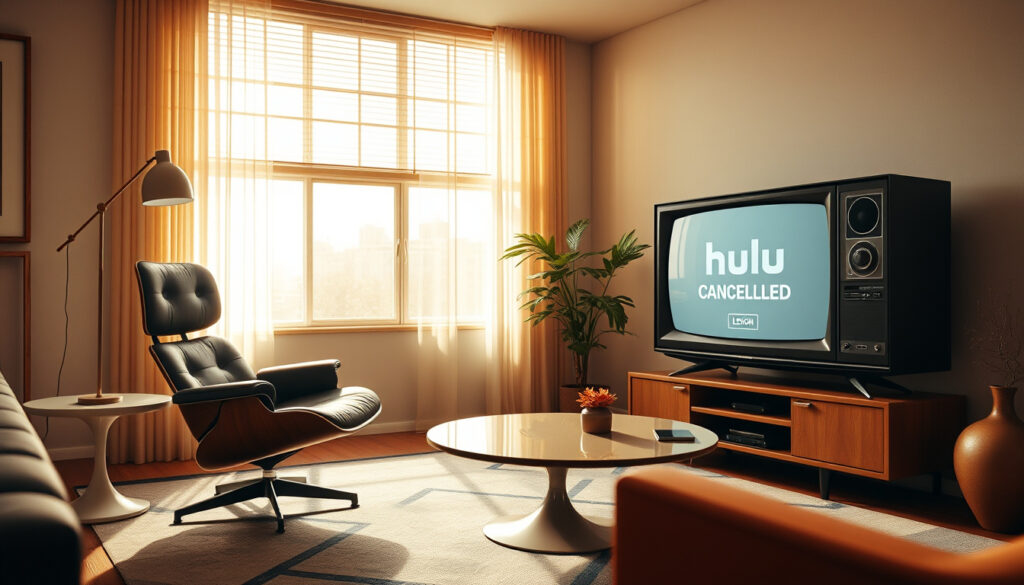
Mid-Century Modern: Design Guide + Hulu Show Cancellation
If you’ve been hunting for “Mid-Century Modern” ideas for your living room, you might also have stumbled across a Hulu sitcom with the same name. One is a design movement that defined how millions furnished their homes; the other is a 2025 comedy starring Nathan Lane that lasted exactly one season. Here’s how to tell them apart — and what you need to know about both.
Design Period: Mid-20th century · TV Show Status: Canceled after one season · Key Creators: Max Mutchnick and David Kohan · Main Stars: Nathan Lane, Matt Bomer, Linda Lavin · Design Traits: Clean lines, no embellishment
Quick snapshot
- Design movement ran 1945–1970 (Wikipedia – Mid-century modern)
- Hulu sitcom premiered March 28, 2025 (Wikipedia – Mid-Century Modern TV series)
- Sitcom canceled September 29, 2025 (Wikipedia – Mid-Century Modern TV series)
- Exact reason Hulu gave for canceling the series beyond the announcement
- Whether streaming viewership numbers will ever be publicly disclosed
- Whether any studio has approached the creators about revival
- Design roots: mid-1930s; peak period: 1945–1970 (Innist – Evolution of Mid-Century Modern Design)
- Sitcom run: March 28, 2025 – September 29, 2025 (roughly 6 months) (Wikipedia – Mid-Century Modern TV series)
- Design resurgence: late 1990s, ongoing (Wikipedia – Mid-century modern)
- No season 2 announced as of the cancellation date (Wikipedia – Mid-Century Modern TV series)
- Design movement continues to influence furniture, architecture, and interior decor (Wikipedia – Mid-century modern)
- International viewers can still access the sitcom via Disney+ (Wikipedia – Mid-Century Modern TV series)
The table below consolidates key facts about both the design movement and the television series, helping to clarify their distinct characteristics.
| Label | Value |
|---|---|
| TV Genre | Sitcom |
| Filming Location | Palm Springs |
| Design Characteristics | Simple lines, no embellishment |
| Show Stars | Nathan Lane, Matt Bomer |
What is the mid-century modern style?
Mid-century modern (MCM) is a design movement that took off after World War II, roughly spanning 1945 to 1970. The term itself was coined by Cara Greenberg in her 1984 book “Mid-Century Modern: Furniture of the 1950s,” though the aesthetic had been flourishing for decades by then (Wikipedia, the encyclopedia). At its heart, MCM emphasizes clean lines, simplicity, and a deliberate absence of ornamental embellishment — a reaction against the heavier, more ornate styles that preceded it.
Origins and timeline
The movement’s roots trace back to the mid-1930s, but it truly flourished once postwar economic growth, suburban expansion, and a surge in demand for affordable housing kicked in (Innist, design history blog). The 1949 “California Design” exhibition was a pivotal moment, spotlighting the aesthetic that would soon dominate interiors across North America, Europe, and Brazil (Huset, design history resource).
Core characteristics
MCM designers championed “form follows function” and drew heavily from European modernism — particularly the Bauhaus school — while also embracing Scandinavian and Brazilian influences that emphasized clean simplicity and integration with nature (Wikipedia, the encyclopedia). Materials like plywood, fiberglass, and plastic became mainstream thanks to post-war technological advances (Huset, design history resource). Influential figures include Charles and Ray Eames, Eero Saarinen, and George Nelson — names still attached to furniture that commands premium prices at auction today.
The design movement’s 25-year peak produced furniture, architecture, and graphic work that still commands the market — and the aesthetic keeps resurfacing because it works equally well in urban apartments and suburban homes.
Is there a season 2 of Mid-Century Modern?
No second season has been announced. Hulu canceled the sitcom after one season, with creator Max Mutchnick breaking the news on Instagram on September 29, 2025 (Wikipedia, the encyclopedia). The show premiered on March 28, 2025, with all 10 episodes released simultaneously — a common streaming strategy that didn’t, in this case, lead to renewal.
Official cancellation status
The cancellation was confirmed directly by Mutchnick on social media rather than through a network press release. Hulu has not publicly disclosed viewership figures or provided an explicit reason beyond the announcement itself.
Fan reactions
Reviews were notably warmer than the renewal outcome suggested. Rotten Tomatoes logged an 88% positive score from 26 critics, with the consensus reading: “Harkening back to the classic sitcom formula while unafraid to have a contemporary, risqué sense of humor, Mid-Century Modern is endearingly old-fashioned” (Wikipedia, the encyclopedia). Metacritic assigned a 67/100 score based on 11 critics — described as “generally favorable” — though the show still didn’t survive its first season.
Positive reviews did not save this show. The pattern — warm critical reception, limited renewal — is one streaming viewers have seen before, and it underscores how platform economics can override critical praise.
Why was Mid-Century Modern cancelled?
Hulu canceled the series after a single season. Beyond the creator’s Instagram announcement on September 29, 2025, the streaming platform has not issued a detailed statement explaining the decision (Wikipedia, the encyclopedia). Viewership numbers have not been publicly released, making it difficult to assess whether the cancellation reflected poor performance, strategic reallocation, or other factors known only to Hulu’s programming team.
Reasons from reports
The show received generally favorable critical notices, which makes the cancellation appear counterintuitive on the surface. Streaming platforms routinely cancel well-reviewed shows for reasons that remain opaque to the public — budget reallocation, licensing complexities, or broader content strategy shifts.
Production details
The series filmed in Palm Springs, California — a location choice that aligned thematically with the MCM aesthetic. Linda Lavin, whose final television role was in the series, appeared in 8 episodes following posthumous editing (Wikipedia, the encyclopedia). The international release on Disney+ means viewers outside the US can still access the series even after its domestic cancellation.
Without disclosed viewership data, any analysis of the cancellation is speculative. Viewers interested in revival prospects should watch whether any studios approach the creators about a second chance — a pattern that has played out for other canceled-streaming sitcoms.
Is mid-century modern 50s or 60s?
The movement spans roughly 1945 to 1970, though some definitions narrow it to 1947–1957 post-WWII or broaden it to 1933–1965 (My Modern Met, design publication). Calling it purely a “50s” or “60s” aesthetic oversimplifies a movement that evolved across three decades.
Exact timeframe
The core period most historians agree on is 1945–1970, anchored by post-war economic growth and the housing boom that followed (Wikipedia, the encyclopedia). The term “mid-century” itself refers to that midpoint in the 20th century — roughly the middle third of the 1900s.
Peak popularity
Furniture design in the 1940s–50s was governed by functionality and simplicity, with the style reaching its commercial peak in the 1950s before evolving through the 1960s (AnOther, design magazine). The aesthetic’s influence tapered in the early 1970s but experienced a resurgence in the late 1990s that continues today (Wikipedia, the encyclopedia).
If you’re shopping for authentic vintage MCM pieces, focus on construction and designer attribution rather than the decade stamp — the same principles of clean lines and functionality define the style regardless of whether a piece predates or postdates 1960.
What makes something look mid-century modern?
The look is defined by clean, simple lines and a deliberate lack of embellishment — the principle of “form follows function” applied to furniture, architecture, and interior decor (Wikipedia, the encyclopedia). Beyond that broad strokes, several recurring visual cues distinguish the aesthetic.
Furniture and decor tips
Low seating, rounded organic edges, tapered legs, and simple geometric details characterize MCM furniture (AnOther, design magazine). Think Eames Lounge Chairs, George Nelson bubble lamps, and teak credenzas — pieces that remain in production or command high resale prices. When sourcing decor, prioritize functionality over ornament and look for natural materials: wood, leather, woven textiles.
Architecture elements
In California Desert regions like Palm Springs, MCM homes feature linear bricks, expansive glass walls, and flat roofs designed to blend with arid landscapes (Creative Mines, architecture blog). Pacific Northwest variants tend toward darker materials that complement the lush, green surroundings rather than contrast with them. Sub-styles within the broader movement include International Style, Space Age, and Brutalism — each reflecting different cultural anxieties and aspirations of the era (Atomic Ranch, modernist architecture resource).
Authentic MCM pieces command premium prices on the vintage market. For budget-conscious decorators, reproduction lines — notably IKEA’s homage collections — offer the look without the auction-house cost, though without the material quality or provenance of original era pieces.
Clarity check
Confirmed
- No second season announced for the Hulu sitcom
- Design movement ran 1945–1970
- Sitcom canceled by Hulu
- 88% Rotten Tomatoes score
- Premiere date: March 28, 2025
Unclear
- Exact Hulu reason for canceling beyond the announcement
- Whether viewership data will ever be publicly disclosed
- Whether the show has revival potential
- Precise subscriber impact on Hulu’s decision
What people are saying
Harkening back to the classic sitcom formula while unafraid to have a contemporary, risqué sense of humor, Mid-Century Modern is endearingly old-fashioned.
— Rotten Tomatoes consensus (Wikipedia – Mid-Century Modern TV series)
Mid-century modern (MCM) is a style of design popular in the mid-twentieth century, characterized by clean, simple lines and lack of embellishment.
— Wikipedia, defining the design movement (Wikipedia – Mid-century modern)
The sitcom earned praise for its performances — particularly Nathan Lane and Matt Bomer — and for threading nostalgic sitcom warmth with contemporary sensibility. Critics consistently noted the show’s thematic fit: a comedy named after an enduring aesthetic, filmed in a location that embodies that aesthetic. The critical consensus suggested the show had personality and charm; the platform calculus apparently disagreed.
Bottom line
Mid-century modern is two things: a design movement that shaped how the Western world furnished and built homes from 1945 to 1970, and a Hulu sitcom that ran for one season in 2025 before being canceled. The design aesthetic remains commercially relevant — influencing everything from IKEA’s budget lines to high-end auction houses. The sitcom, despite warm reviews, did not survive its first season. For readers interested in the design movement, the style offers decades of furniture history and timeless aesthetic principles to explore. For fans of the show, the series remains accessible internationally via Disney+ — but a second season shows no signs of materializing.
Related reading: Nike Air Max Plus Guide · Heat Pump Water Heater Guide
Brands like Icon by Design exemplify mid-century modern through solid wood furniture crafted with Scandinavian influences and no markups.
Frequently asked questions
What is Mid-Century Modern TV series about?
The Hulu sitcom Mid-Century Modern followed characters navigating relationships, careers, and personal growth in a Palm Springs setting. Created by Max Mutchnick and David Kohan, the show starred Nathan Lane, Matt Bomer, and Linda Lavin.
Who is in the Mid-Century Modern cast?
The main cast included Nathan Lane, Matt Bomer, Linda Lavin, and Nathan Lee Graham. Linda Lavin’s appearance in 8 episodes marked her final television role.
Where can I buy mid-century modern furniture?
Authentic vintage pieces appear at auction houses, estate sales, and specialist dealers. Reproduction lines from IKEA, CB2, and West Elm offer the aesthetic at lower price points. Online marketplaces like 1stDibs specialize in high-end MCM finds.
How to identify mid-century modern architecture?
Look for flat or low-pitched roofs, expansive glass windows, open floor plans, integration with natural surroundings, and materials like teak, walnut, and fiberglass. The “form follows function” principle means ornamental details are typically minimal or absent.
Was Mid-Century Modern filmed in Palm Springs?
Yes, the sitcom filmed on location in Palm Springs, California — a city whose architecture is closely associated with the mid-century modern aesthetic.
What are examples of mid-century modern houses?
Notable examples include Richard Neutra’s Lovell Health House in Los Angeles and the Palm Springs homes featured in the sitcom’s location shots. The movement’s principles also appear in Le Corbusier’s Villa Savoye in France and throughout Scandinavian residential design from the period.
More related posts
 Heart Emoji Copy and Paste ❤️💖💕: List, Meanings, Shortcuts
 Cast of Lilo & Stitch: Live-Action 2025 and Original
 Best Places to Snorkel – Top 20 Worldwide Destinations
 Prayer Time London Ontario – Accurate ISNA Mosque Schedule
 Nose Piercing Near Me: Ireland Studios, Costs & Safety Tips
 Air Canada Last Minute Deals – Cheap Flights and Packages
 How to Unclog Ear – Safe Remedies for Quick Relief
 117 USD to CAD – Current Rate and Conversion Guide
