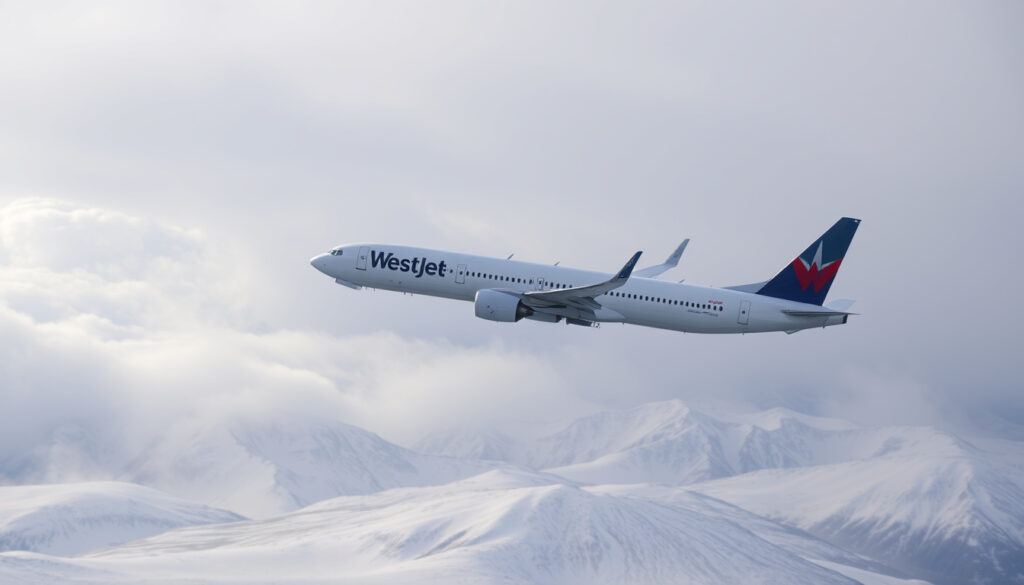
WestJet Flight 2390 Diversion: Twice Diverted from Calgary
Passengers boarded WestJet Flight 2390 expecting a straightforward journey from Calgary to Cuba’s sun-soaked beaches. Instead, 157 travelers spent an entire day in limbo when the Boeing 737 MAX 8 required two unscheduled maintenance diversions, eventually landing in Toronto rather than Varadero. The incident highlights how quickly routine air travel can unravel—and what passengers need to know when the unexpected forces a flight off course.
Flight Number: WS2390 · Origin: Calgary (YYC) · Intended Destination: Varadero, Cuba · Final Destination: Toronto · Passengers Onboard: 157 · Diversions: 2
Quick snapshot
- Flight WS2390 diverted twice (CTV News)
- Aircraft was Boeing 737 MAX 8 (Trip.com Flight Status)
- Final landing in Toronto (CTV News)
- 157 passengers aboard (CTV News)
- Specific maintenance issue prompting diversions (FlightAware)
- Whether crew or passenger factors contributed (FlightAware)
- Details on compensation offered (WestJet advisories)
- Departed Calgary → diverted (maintenance) → diverted again → landed Toronto (FlightAware tracking)
- Entire journey took place on same day (CTV News report)
- Passengers likely rebooked to Varadero or offered refunds (WestJet Cuba advisory)
- WestJet may face scrutiny over incident communication (CTV News coverage)
The table below summarizes key flight details from available sources.
| Detail | Value |
|---|---|
| Flight | WestJet WS2390 |
| Date | October 26 |
| Route | YYC to VRA |
| Diversions | 2 (maintenance-related) |
| Aircraft | Boeing 737 MAX 8 |
| Passengers | 157 |
| Final Destination | Toronto (YYZ) |
| Sources | CTV News, Trip.com, FlightAware |
What happened to WestJet Flight 2390?
WestJet Flight 2390 took off from Calgary International Airport (YYC) on Saturday morning, bound for Juan Gualberto Gómez International Airport (VRA) in Varadero, Cuba—a route typically operated by Boeing 737 MAX 8 aircraft configured with 174 seats. According to CTV News, the flight never reached its intended destination.
Departure from Calgary
The aircraft departed Calgary as scheduled, carrying 157 passengers. The route is served by WestJet’s Boeing 737 MAX 8 fleet, which typically offers meals, entertainment via personal devices, and USB power—though no Wi-Fi service. Historical flight data from Trip.com Flight Status shows WS2390 had operated on schedule for several consecutive weeks prior to this incident, with typical departure times around 10:00 and arrival in Varadero by late afternoon.
First diversion reason
WestJet confirmed that the flight was diverted “out of caution to perform unscheduled maintenance,” according to a statement shared via social media. This aligns with the airline’s standard protocol: when mechanics identify a potential issue, flights are redirected to the nearest suitable airport rather than risk continuing in flight. The airline has a zero-tolerance approach to any safety concern, as Global News reporting noted in a separate WestJet incident statement.
Safety-first protocols mean passengers endure inconvenience, but airlines prioritize preventing potential mid-flight emergencies. The maintenance diversion likely prevented a more serious situation.
Second diversion and final landing
After the first diversion, the flight crew apparently attempted to continue toward Varadero—only to divert a second time. The specific reason for the second diversion remains unclear from public records. FlightAware’s tracking data, which records scheduled, estimated, and actual times, shows no publicly available details explaining the second diversion. Eventually, the aircraft and its passengers ended the day in Toronto, having covered significant extra distance without reaching the original destination.
What happens to passengers when flights are diverted?
Flight diversions disrupt more than schedules—they trigger a complex set of airline obligations and passenger rights. When a WestJet flight diverts, several procedures activate automatically.
Immediate onboard procedures
Once an aircraft diverts, the captain coordinates with ground operations at the destination airport. Passengers typically remain seated until the aircraft doors open and ground staff or local authorities assume responsibility. In situations involving mechanical issues, the flight crew will provide updates when possible, though information is often limited until maintenance crews assess the aircraft. The airline’s ground team then takes over passenger coordination, arranging for buses, hotels, or rebooking options depending on circumstances.
Rebooking and compensation
WestJet’s policies allow passengers affected by advisory-related changes to receive a one-time fee waiver for rebooking, with a 60-day window to complete travel. However, the WS2390 incident occurred mid-flight rather than pre-departure, meaning standard change policies may not have applied directly. For Cuba-specific disruptions, WestJet’s official travel advisories indicate that passengers whose flights were cancelled received refunds to their original payment method, including add-ons like Travel Protection Plan, seat selection, and baggage fees. Meal and hotel provisions depend on the reason for diversion and the airline’s assessment of passenger needs during extended ground time.
Passengers on diverted flights should document their original booking confirmations, retain all receipts for expenses incurred during delays, and request clarification on compensation eligibility from WestJet ground staff before leaving the airport.
Communication from airline
WestJet offers a flight status checker on its website where passengers can enter their flight number or departure/arrival airports for real-time updates. During disruptions, the airline typically sends push notifications to passengers who have provided contact information and uses social media channels to disseminate updates. Passengers on WS2390 reportedly took to social media to share their experiences and seek answers from the airline, with some noting frustration with communication delays during the day-long ordeal.
What to do if you’re on a diverted flight?
Finding yourself on a diverted flight can be disorienting, but having a plan helps minimize stress and protects your rights as a traveler.
Stay calm and follow crew instructions
Flight crews are trained for diversion scenarios. Listen to announcements, remain seated until doors open, and follow instructions from both flight attendants and ground personnel. The captain may not have immediate answers about the diversion reason—mechanical issues often require assessment before details are confirmed. Panicking or demanding instant answers helps no one and can create additional problems for airline staff already managing a difficult situation.
Document everything
Take photos of your boarding pass, any displayed flight information screens, and the aircraft interior if safe to do so. Save receipts for food, beverages, or accommodations purchased during the diversion. This documentation becomes essential if you need to file a complaint or request compensation later. Global News reporting showed that passengers on a previous WestJet diversion incident documented their experiences extensively, which helped clarify the timeline of events.
Know your rights
Canadian passengers have specific protections under the Air Passenger Protection Regulations (APQR). While these regulations have specific eligibility criteria based on cause and delay length, passengers whose flights are cancelled or who experience significant delays may be entitled to refunds or compensation. Contacting WestJet’s customer service team, either at the airport or through official channels, helps establish your status in the rebooking queue and ensures you’re included in any mass communication about alternative arrangements.
Airlines may not proactively offer compensation unless passengers ask. Being prepared to reference your rights under APQR gives you leverage in conversations with ground staff.
Why was WestJet Flight 2390 diverted twice?
The question on many travelers’ minds is why a single flight required two separate diversions. Publicly available information provides only partial answers.
Unscheduled maintenance
WestJet officially cited “unscheduled maintenance” as the reason for diverting WS2390. The airline’s travel advisories page confirms that maintenance-related diversions fall under the airline’s safety-first protocols. When an issue is identified either before departure or mid-flight, the aircraft is redirected to allow certified technicians to assess and address the problem.
The challenge with the WS2390 situation is that no specific maintenance details have been publicly released. FlightAware’s tracking system records scheduled, estimated, and actual times but does not include technical specifics about mechanical issues. Airlines typically do not disclose detailed maintenance information publicly, citing operational security concerns—detailed knowledge about specific aircraft issues could theoretically be exploited.
Crew and passenger factors
Social media discussions about WS2390 referenced “partly the passengers fault but also some of the crew” in a Facebook group discussion, though these claims remain unverified. A separate comparable incident reported by Global News involved an unruly passenger on a WestJet flight from Terrace, BC, which diverted back to Terrace Regional Airport—where RCMP arrested the individual. That case involved a passenger who consumed an illegal substance, showed paranoia, and attempted to open aircraft exits before being apprehended under the Mental Health Act.
However, there is no confirmed connection between that type of incident and WS2390. WestJet has not issued any statements suggesting crew or passenger misconduct contributed to the double diversion.
Official statements
WestJet’s official statement, shared via Instagram, confirmed the flight was “diverted out of caution to perform unscheduled maintenance.” This is the only direct statement from the airline regarding the incident. The statement aligns with standard aviation protocols but provides no specifics about the nature of the maintenance issue or the reason for the second diversion.
The lack of detailed public information about maintenance issues reflects a broader tension in aviation: airlines protect operational security, while passengers deserve transparency about events affecting their travel. Without official detail, speculation fills the gap—some of it accurate, much of it not.
Passenger experiences on WestJet Flight 2390 diversion
The human element of the WS2390 incident comes through social media posts and online discussions, painting a picture of frustration, confusion, and resilience.
Social media reactions
Passengers took to platforms including Facebook and Instagram to share their experiences during and after the diversion. CTV News video coverage captured passenger reactions, with some expressing disappointment about the missed vacation while others noted the professionalism of the flight crew under difficult circumstances.
A Facebook discussion included comments from passengers noting that the situation involved “partly the passengers fault but also some of the crew,” characterizing it as “a sticky situation.” These unverified accounts suggest that interpersonal dynamics may have complicated the diversion process, though the specific details remain unclear.
Delays and frustrations
The day-long ordeal meant passengers spent hours in airports, uncertain about their final destination, meal arrangements, and when they might finally reach Varadero or return home. The cumulative effect of two diversions compounded typical diversion frustrations—additional time in transit, uncertainty about luggage, and separation from vacation plans already paid for.
Resolution outcomes
Based on WestJet’s standard policies and the Cuba-specific advisory situation, passengers whose flights were cancelled or significantly disrupted were entitled to automatic refunds to their original payment method, including add-on services. However, the diversion scenario—where passengers did eventually land somewhere—may have involved different processes, potentially including rebooking to a later flight to Varadero rather than refund-only options.
WestJet Flight WS2390 Timeline
This timeline consolidates available information about the flight’s unusual routing.
| Date/Period | Event |
|---|---|
| Saturday morning, departure | WestJet Flight 2390 departs Calgary International Airport (YYC) for Varadero, Cuba |
| Mid-flight, first diversion | Aircraft diverts out of caution for unscheduled maintenance; lands at intermediate airport |
| Ground assessment | Maintenance crews evaluate aircraft; flight crew prepares for continued attempt |
| Second departure attempt | Aircraft takes off again; second diversion occurs |
| End of day | Flight lands in Toronto; passengers face rebooking or refund decisions |
How to Track and Handle a Diverted WestJet Flight
When disruptions occur, having the right tools and knowledge helps passengers regain control of their travel plans.
- Check WestJet’s flight status page — Enter your flight number at WestJet’s official flight status checker for real-time updates on departures, arrivals, and any reported delays.
- Enable notification alerts — WestJet’s app and website allow passengers to opt-in for push notifications, which become critical during disruption events when gate agents may be overwhelmed.
- Document your original booking — Screenshot your confirmation, boarding pass, and any pre-purchased services. This documentation supports refund or compensation claims later.
- Speak with ground staff immediately — Lines may look long, but speaking with a live agent—especially at the airport—helps secure rebooking priority and clarifies your options.
- Request meal and hotel vouchers if eligible — Depending on the diversion reason and duration, ground staff may have authority to provide vouchers for essentials.
- Check travel insurance coverage — If you purchased travel insurance, review your policy for disruption coverage, including trip interruption benefits that may exceed airline minimums.
- File a formal complaint if service was inadequate — WestJet’s customer relations team handles formal complaints; include all documentation and specific details about what went wrong.
Confirmed facts
- Flight WS2390 diverted twice in one day
- Aircraft was Boeing 737 MAX 8
- 157 passengers were aboard
- Maintenance cited as official reason
- Final landing in Toronto
- Calgary origin confirmed
What’s unclear
- Specific maintenance issue details
- Exact intermediate airports for diversions
- Passenger versus crew role in outcomes
- Whether compensation was offered
- Timeline of each diversion
- Luggage handling during disruption
What Experts and Passengers Are Saying
“Aligning with our focus to put guests and crew first and protect the integrity of our operation, the WestJet Group has made the difficult decision to begin an orderly wind down of our operations to Cuba.”
— WestJet (Official Travel Advisories)
“Partly the passengers fault but also some of the crew..that’s why it’s a sticky situation.”
— Tara Williams (Passenger via Facebook)
“WestJet has a zero-tolerance approach to any disruptive or unruly behaviour that could impact the safety and security of our guests, employees and operations.”
— WestJet (Global News reporting)
“We saw the flight just keep going in circles, getting closer to Toronto each time before turning back.”
— Social media witness (CTV News video)
The pattern emerging from passenger accounts and official statements reflects a tension common to aviation disruptions: safety protocols protect passengers from potential catastrophe but create significant inconvenience when triggered. WestJet’s emphasis on “putting guests and crew first” in its Cuba advisory suggests the airline is aware that operational decisions—while necessary—affect real people with real vacation plans and limited patience for extended disruptions.
The double diversion of WS2390 represents an unusual but not unprecedented scenario. What makes it noteworthy is the combination of circumstances: the Cuba route already operating under advisory conditions, the maintenance-related nature of both diversions, and the final landing in Toronto rather than any intermediate point or return to Calgary.
For Canadian travelers considering WestJet flights to Cuba, the incident adds a data point to an already complicated picture. WestJet has announced an orderly wind-down of Cuba operations through April 2026 due to the island’s power outage situation, according to the airline’s official advisories page. Flights to Varadero during this period have been automatically cancelled with refunds issued, though passengers with flexible travel dates may still book or rebook to other destinations.
Related reading: Air Canada Last Minute Deals · Adults Only All Inclusive Resorts Europe & Caribbean
WestJet flights from Calgary have seen multiple disruptions lately, much like the Moncton emergency landing that safely handled a mechanical issue en route to Moncton.
Frequently asked questions
Why did WestJet flight 2390 divert back to Calgary?
WestJet Flight 2390 diverted from its Calgary-to-Varadero route due to unscheduled maintenance requirements. The flight was diverted “out of caution” according to WestJet’s official statement, meaning the crew identified a potential issue that warranted landing at an airport with maintenance facilities rather than continuing to Cuba or returning to Calgary.
What compensation is available for WestJet diversions?
Compensation depends on the cause and specific circumstances of each diversion. Under Canada’s Air Passenger Protection Regulations, passengers may be entitled to compensation for delays caused by airline-controllable issues. WestJet’s advisory-specific policies allow 60-day travel completion windows with no fees for one-time waivers. Passengers should document their experiences and contact WestJet customer relations for specific guidance.
How often do WestJet flights get diverted?
Divertions occur regularly across all airlines due to weather, mechanical issues, medical emergencies, or air traffic control constraints. WestJet does not publicly publish diversion statistics, but flight tracking data from FlightAware shows the WS2390 route has generally operated on schedule in recent months prior to this incident.
What is WestJet’s policy on diverted flights?
WestJet prioritizes safety in diversion decisions, diverting aircraft whenever concerns are identified. The airline then coordinates rebooking, provides updates via its flight status systems, and handles passenger accommodations based on circumstance. The airline’s zero-tolerance policy for safety threats applies to both mechanical issues and passenger behavior.
Can I get a refund for a diverted WestJet flight?
Passengers whose flights are cancelled entirely are entitled to refunds under WestJet’s policies. For diversions where travel continues (even if delayed or to a different destination), refund eligibility depends on whether the passenger chooses to continue or abandons the trip. Keep all documentation and receipts to support any refund or compensation request.
How to track WestJet flight status during diversion?
WestJet’s official flight status checker provides real-time updates by flight number or airport. Third-party tools like FlightAware offer additional tracking data including historical performance. Enable push notifications through WestJet’s app or website for immediate alerts during disruptions.
What caused recent WestJet flight diversions?
Recent WestJet disruptions have included cybersecurity incidents (June 2025, per Wings Magazine reporting), weather advisories in Newfoundland, and ongoing Cuba operational changes due to the island’s power situation. The WS2390 diversion was attributed to maintenance, which aligns with the airline’s safety-first protocols.
More related posts
 Hard Rock Punta Cana: Reviews, Pricing & All-Inclusive Guide
 168 USD to CAD: Convert US Dollars to Canadian Dollars
 Best Places to Snorkel – Top 20 Worldwide Destinations
 Love Is Blind Jessica: Stories of Batten, Vestal & Barrett
 90 USD to CAD – Live Rates and Provider Comparison
 Home Phone and Internet Bundle: Cheapest Ireland Deals
 Missing Children Nova Scotia: Lilly & Jack Sullivan Updates
 More Than a Married Couple Season 2: Updates & Ending Explained
